Process
The Problem
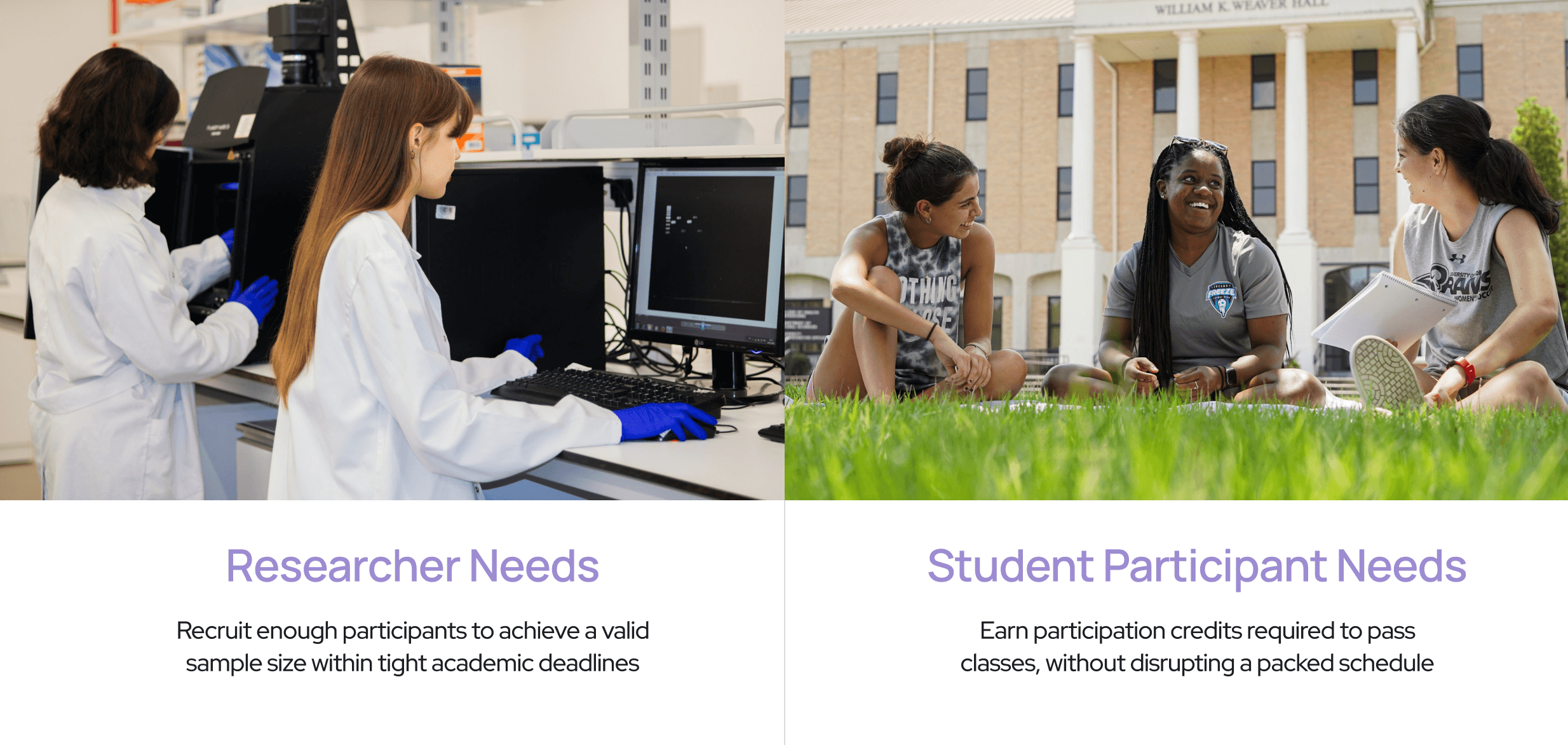
University research depends on a steady pipeline of student participants, yet the systems connecting researchers with participants are scattered, inefficient, and often invisible to the people who need them most. Student researchers struggle to recruit beyond their immediate social circles, while potential participants have no reliable way to find studies that fit their schedule, major, or interests.
The two sides of this problem compound each other: researchers resort to flyers, social media spam, and personal networks, all of which have low conversion and high effort. Participants, meanwhile, scroll past recruitment posts because they've been trained to ignore them.
Research
I used three methods to understand the problem space: in-depth interviews with both researchers and participants, an observational study of how researchers currently recruit, and a competitive analysis of existing solutions.
User Segment Interviews
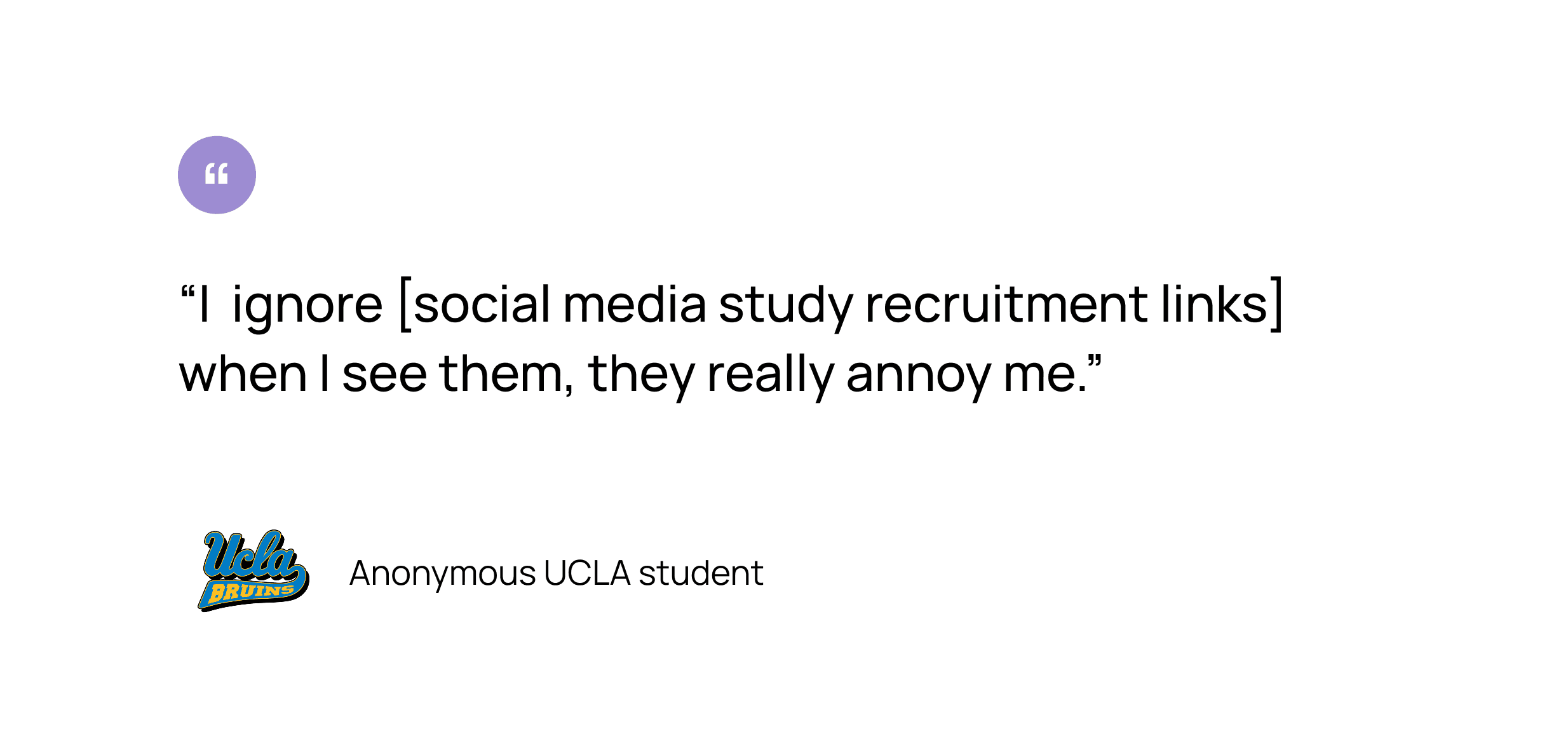
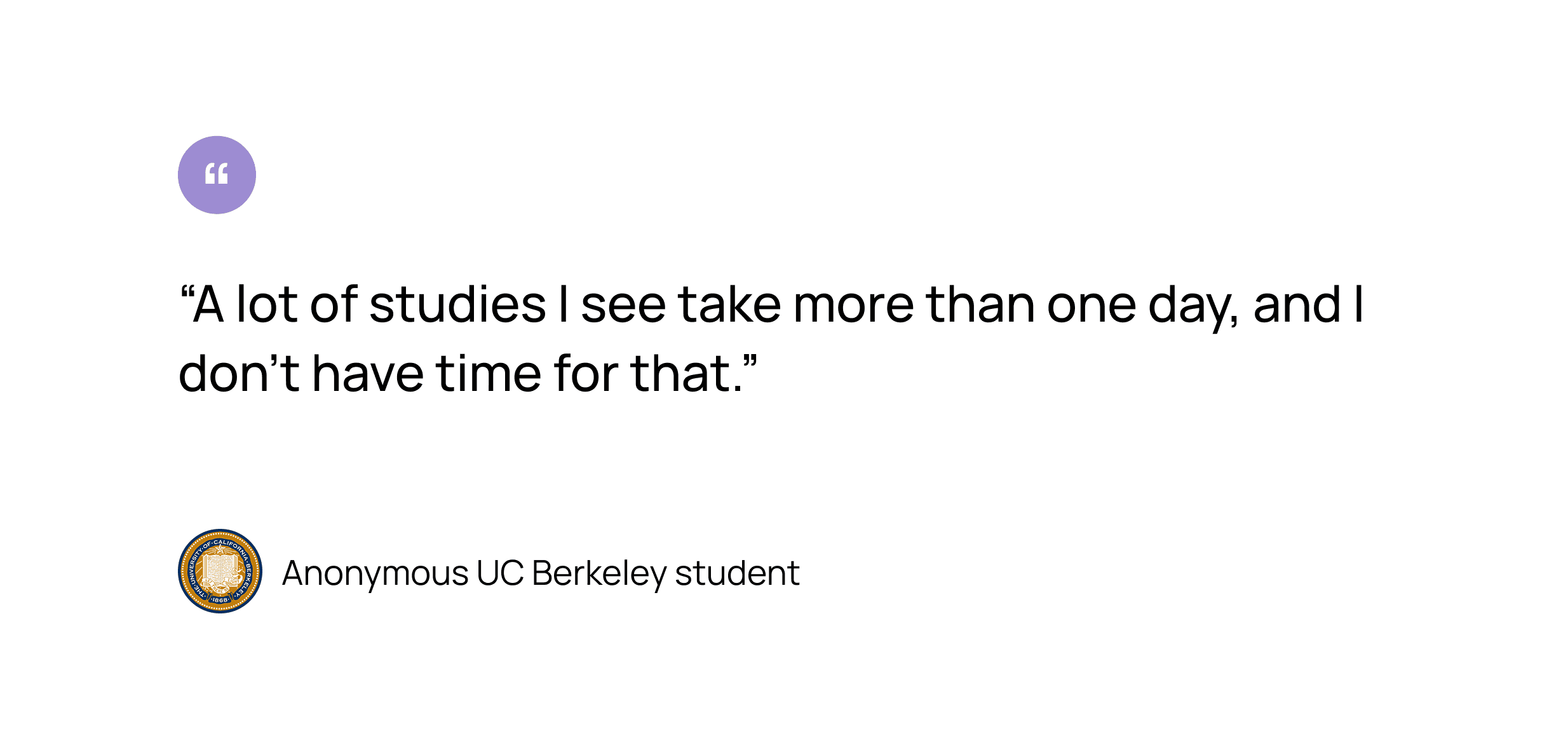
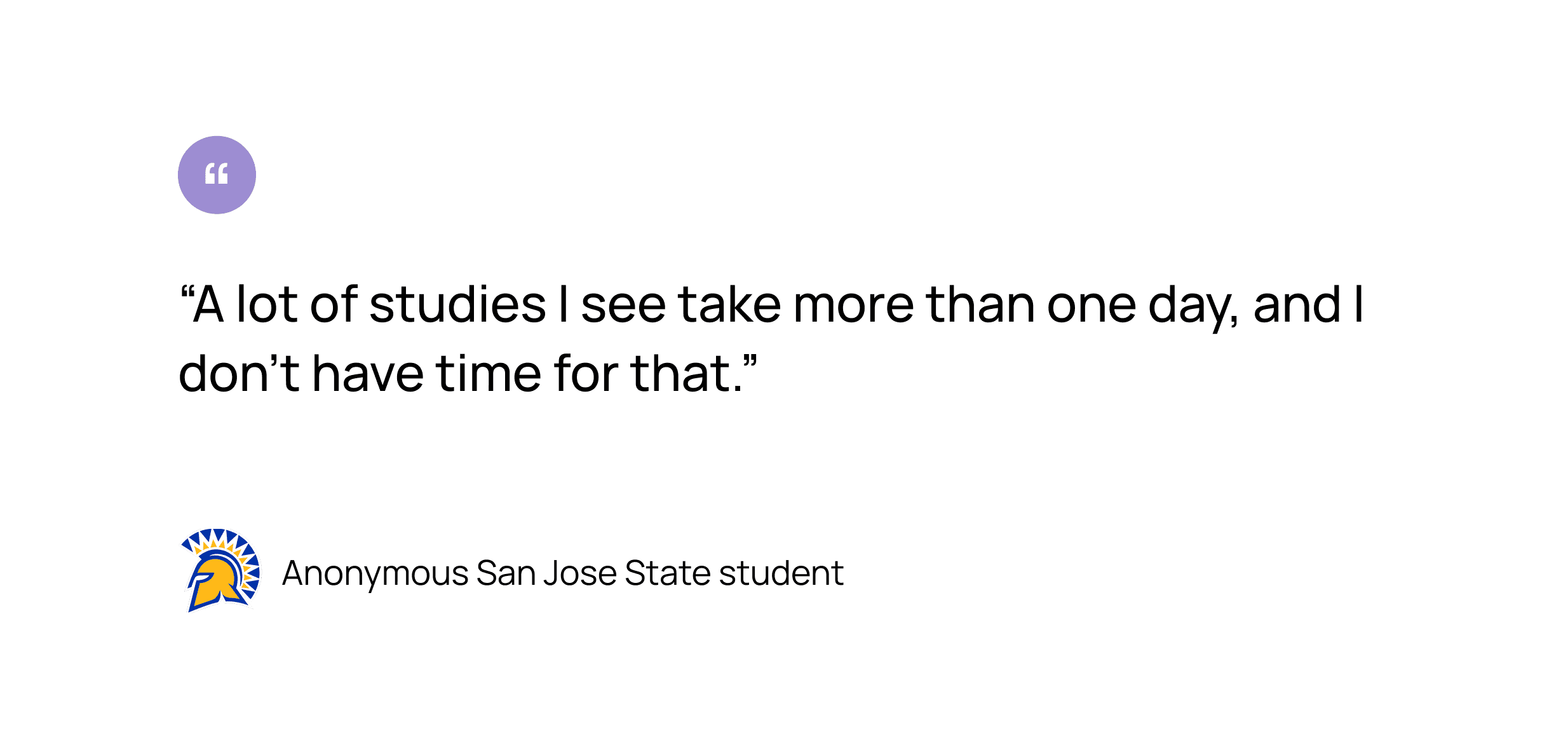
These three quotes capture the core tension at a glance: participants have limited time to find and join studies, while researchers struggle so much with recruitment that they end up compromising their own data integrity out of necessity.
Observational Study
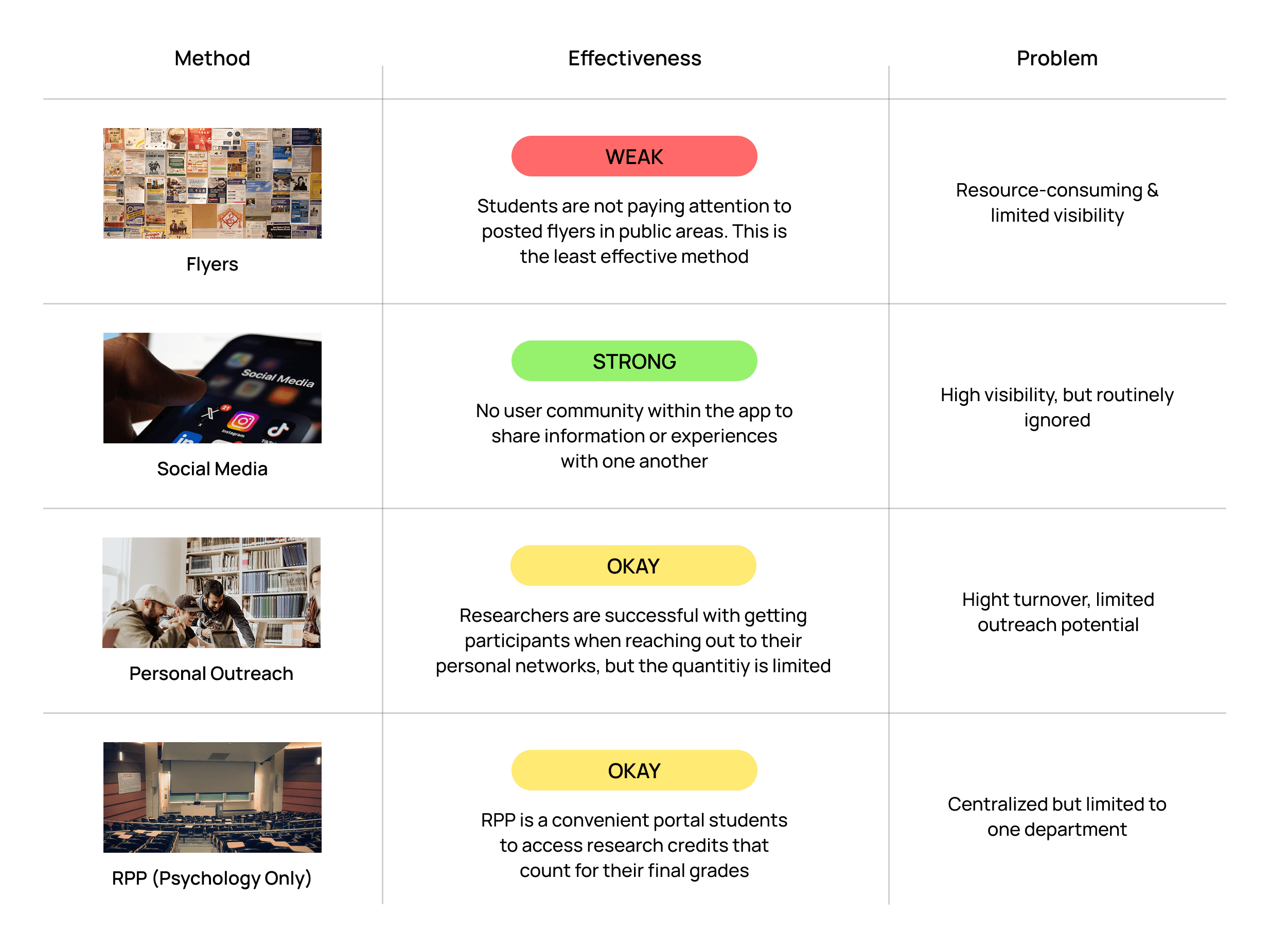
I observed and catalogued the methods researchers use to find participants. Every current method has a critical flaw:
Competitive Analysis: RPP
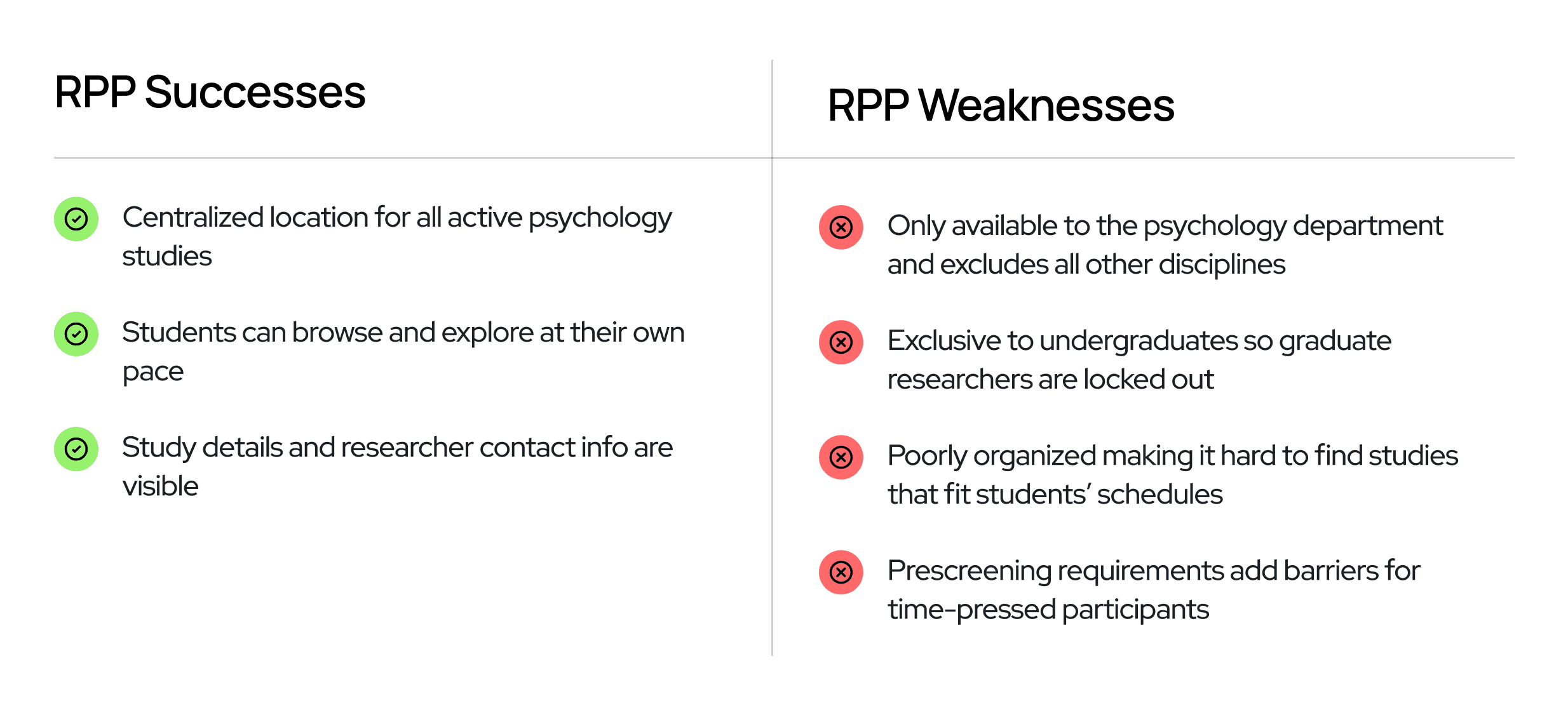
The Research Participation Program (RPP) is the closest thing to a centralized solution that already exists. It has real strengths: students can browse active studies and contact information is shown. This is a good model of a solution that works to serve a need, however it neglects the larger student population since it is only capable of connecting Psychology students to Psychology research on campus, making it an ineffective solution to the broader problem.
I observed and catalogued the methods researchers use to find participants. Every current method has a critical flaw:
Research Analysis
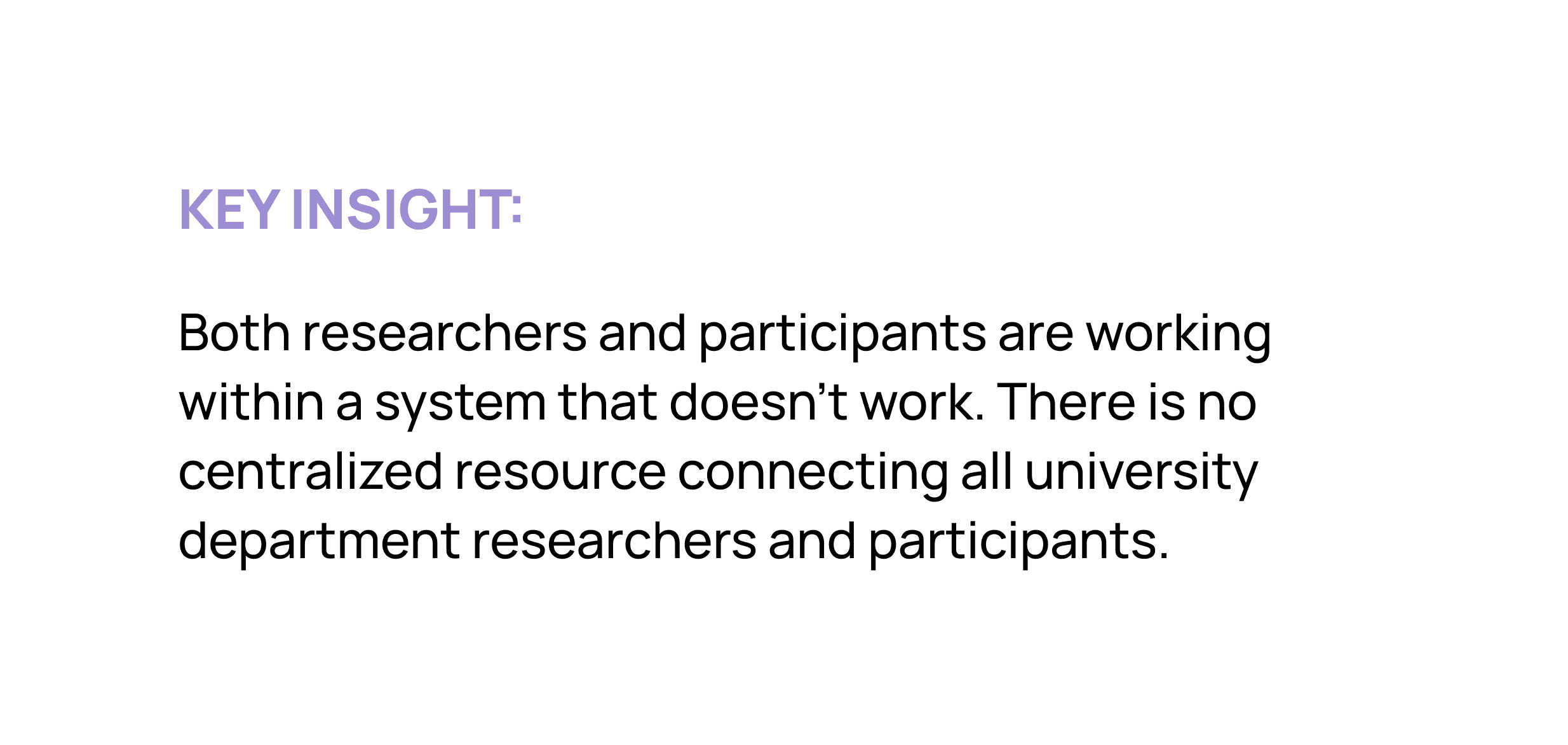
Participants aren't lazy or disengaged, they're overwhelmed by poorly targeted outreach and have no single trusted place to find studies that fit their lives. Researchers aren't failing at communication, they're operating without infrastructure. The opportunity isn't a better flyer or a louder post. It's a platform that makes the match easy.
Users
Two distinct personas emerged from my research, representing the two sides of the participation gap. Both sides are stressed out and overwhelmed but in different ways.
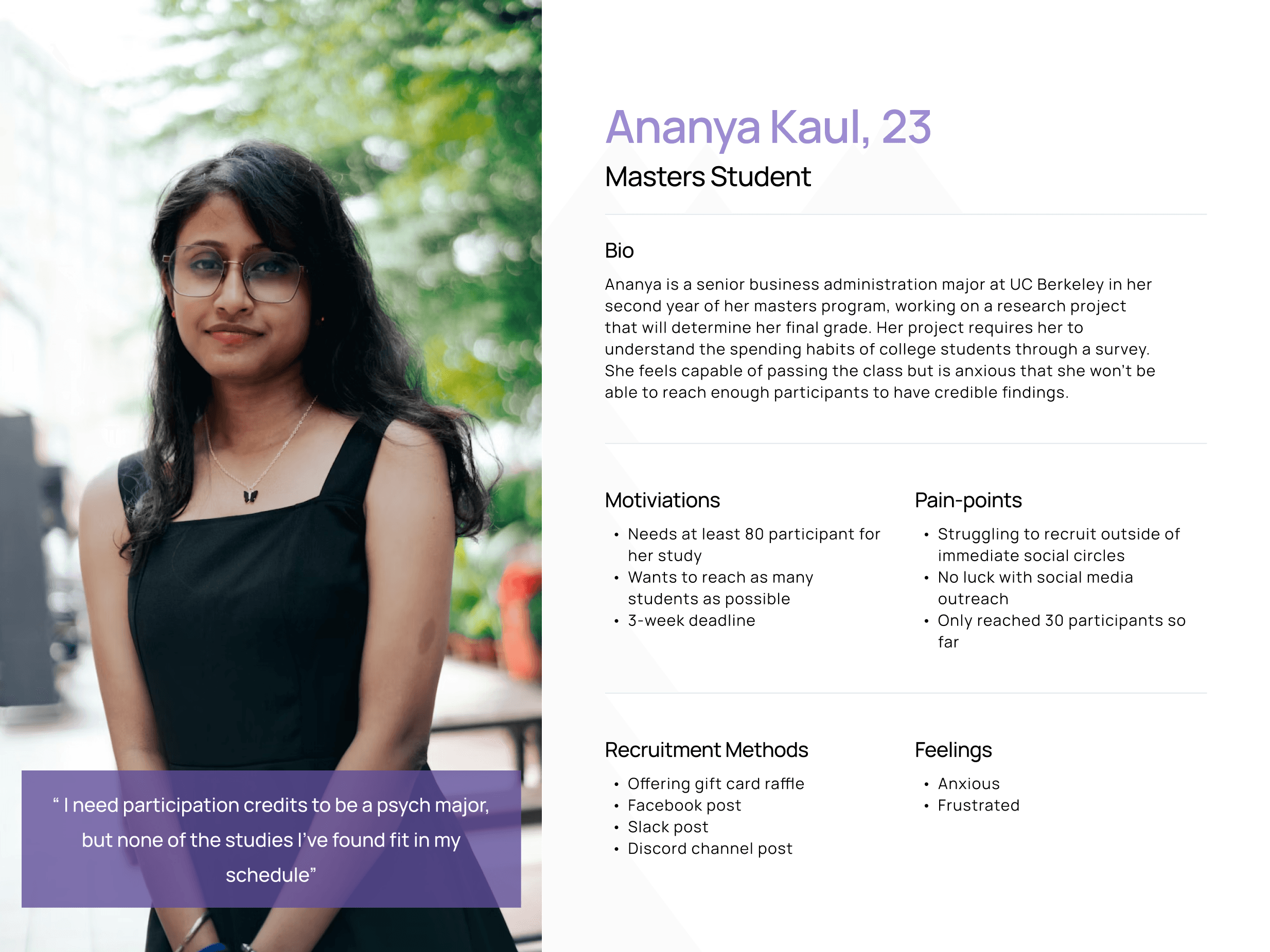
Ananya Kaul, 23. Masters student at UC Berkeley completing a final research project. Needs at least 80 participants to pass her class. She has tried Facebook posts, Slack messages, Discord channel posts, and gift card raffles and still only reached 30 participants.
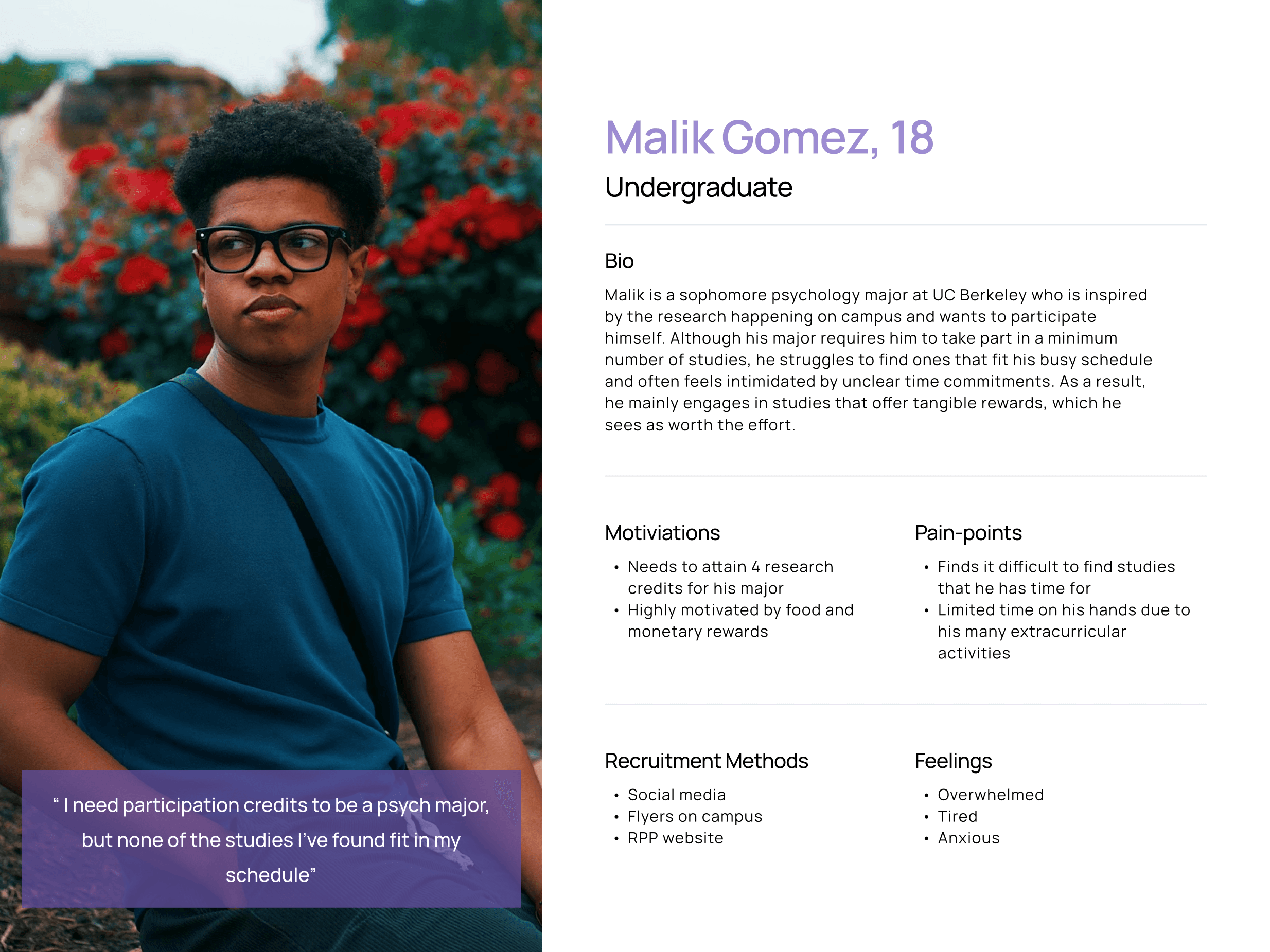
Malik Gomez, 18. Undergraduate psychology major at UC Berkeley. Needs to fulfill research credit requirements for his major but struggles to find studies that fit around his extracurriculars. Feels overwhelmed and anxious about meeting his quota.
The Solution
StudySpotter centralizes campus research by connecting student researchers and participants, simplifying recruitment and enabling cross-department collaboration. It's a web platform where any student, regardless of department or year, can find studies they're eligible for, or post studies to reach a qualified pool of participants.
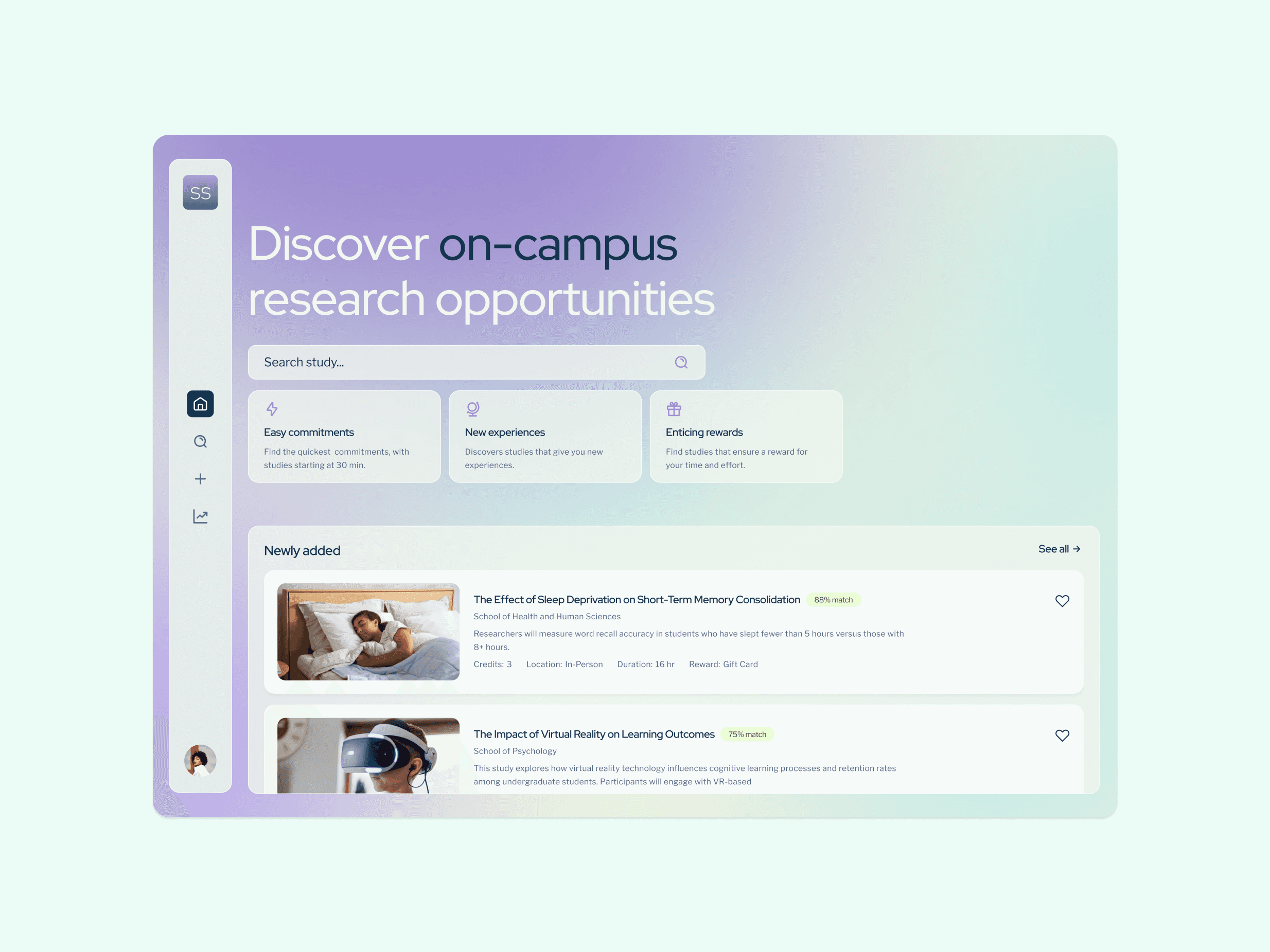
The home page is the first screen both participants and researchers see after logging in. A prominent search bar lets users find specific studies instantly, while three AI-generated shortcut cards surface options based on time commitment, experience, and rewards. A live table of recently added studies sits below, giving users an immediate sense of what's available without any filtering required.
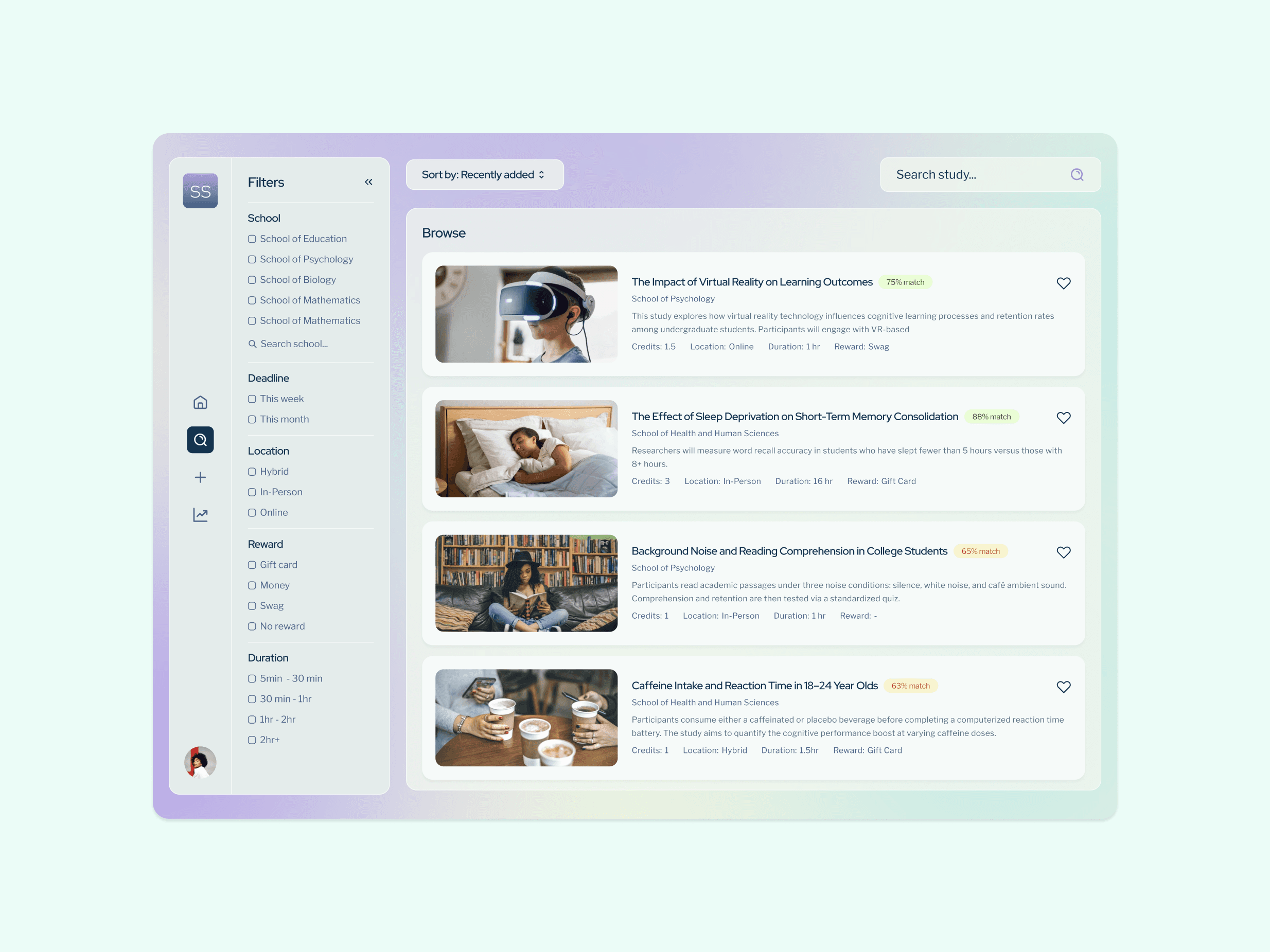
The browse page gives participants full control over finding studies that fit their schedule and interests. A filterable, sortable table displays every available study with key details like deadline, duration, units, and reward type at a glance, so participants can qualify or disqualify a study in seconds. A list and grid view toggle accommodates different browsing preferences.
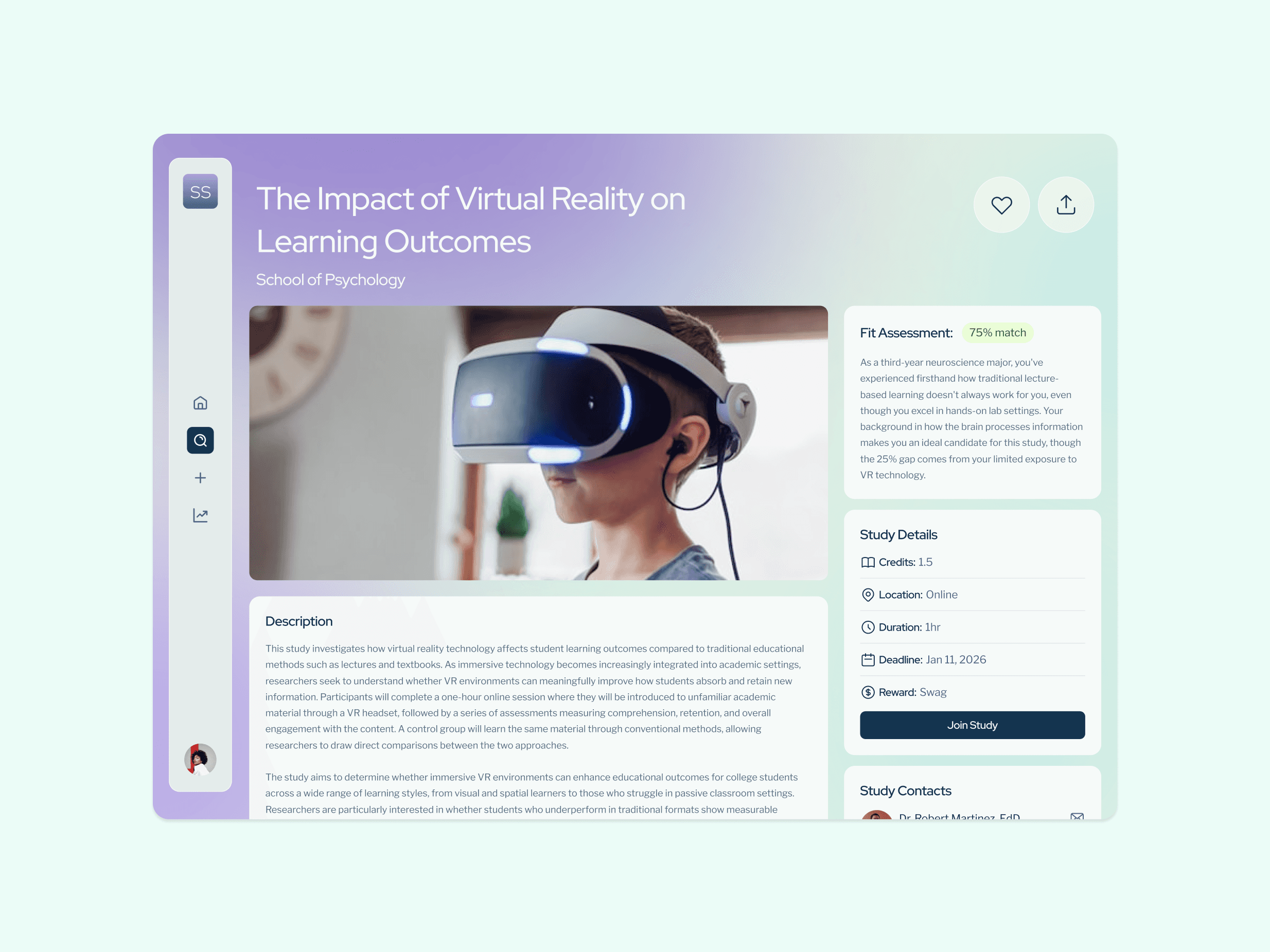
Each study listing opens a dedicated details page showing everything a participant needs to make an informed decision: description, credit value, time commitment, location, reward, and deadline. A personalized fit analysis compares the study's requirements against the user's profile and availability, surfacing a clear compatibility signal before they commit. This reduces last-minute withdrawals and protects researchers' sample sizes.
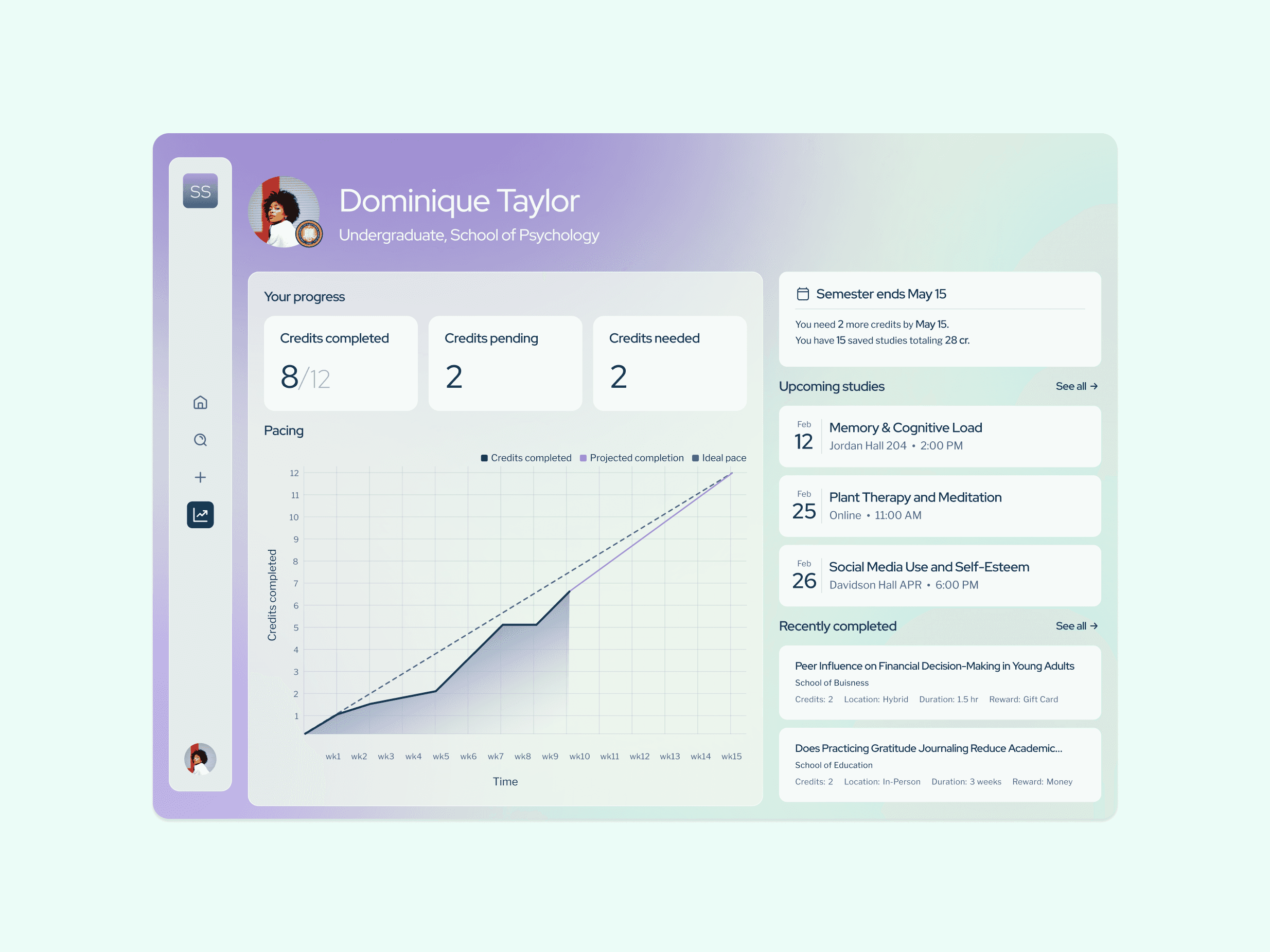
The participant dashboard gives students a centralized view of their research credit journey, with a progress gauge showing credits completed, pending, and still needed. Recently completed and saved studies are easily accessible, while a recommended studies section surfaces new opportunities matched to their profile, making the dashboard a discovery tool even after onboarding. Together these features replace the stress of tracking credits across scattered sources with a single, manageable view.
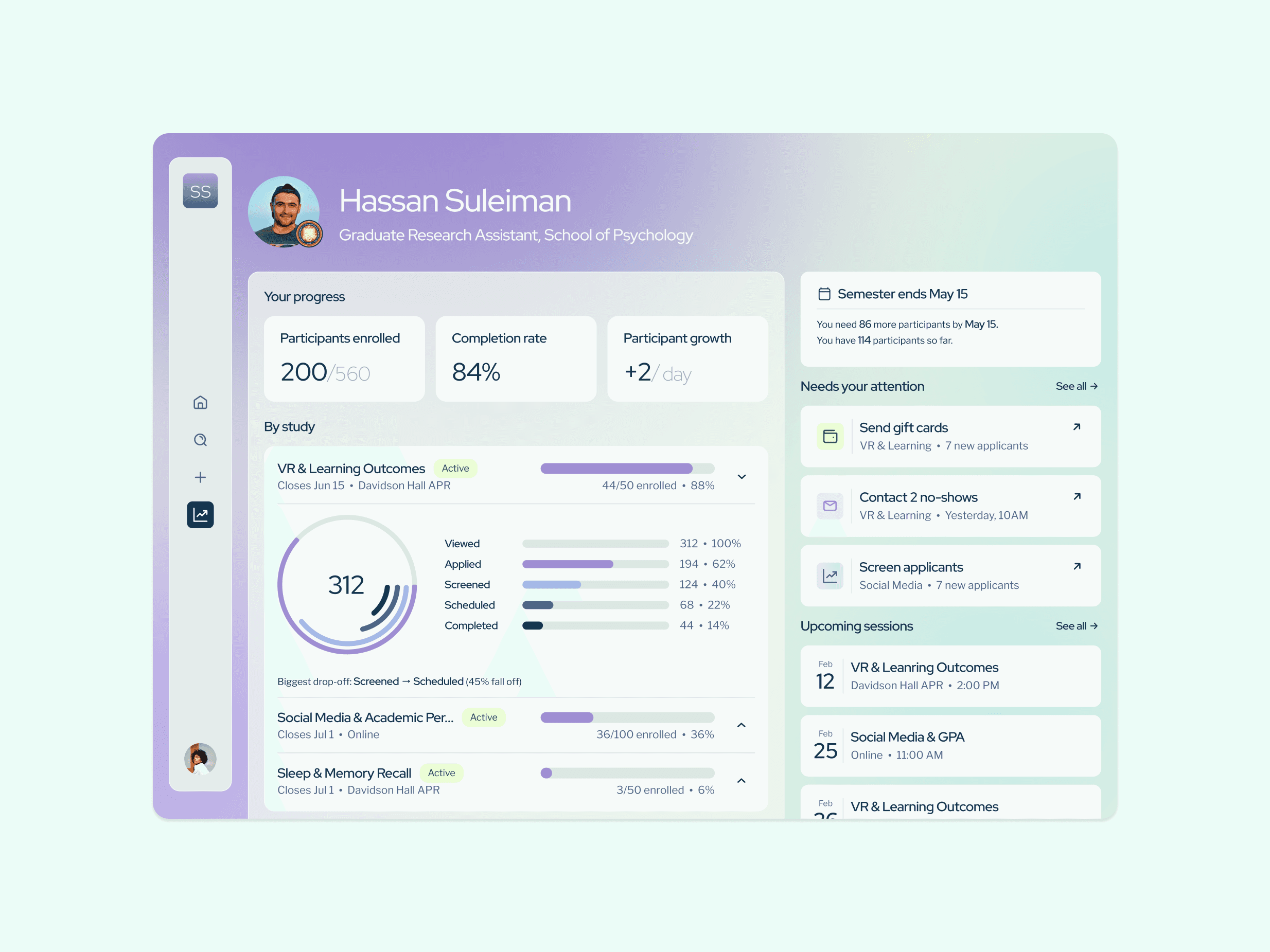
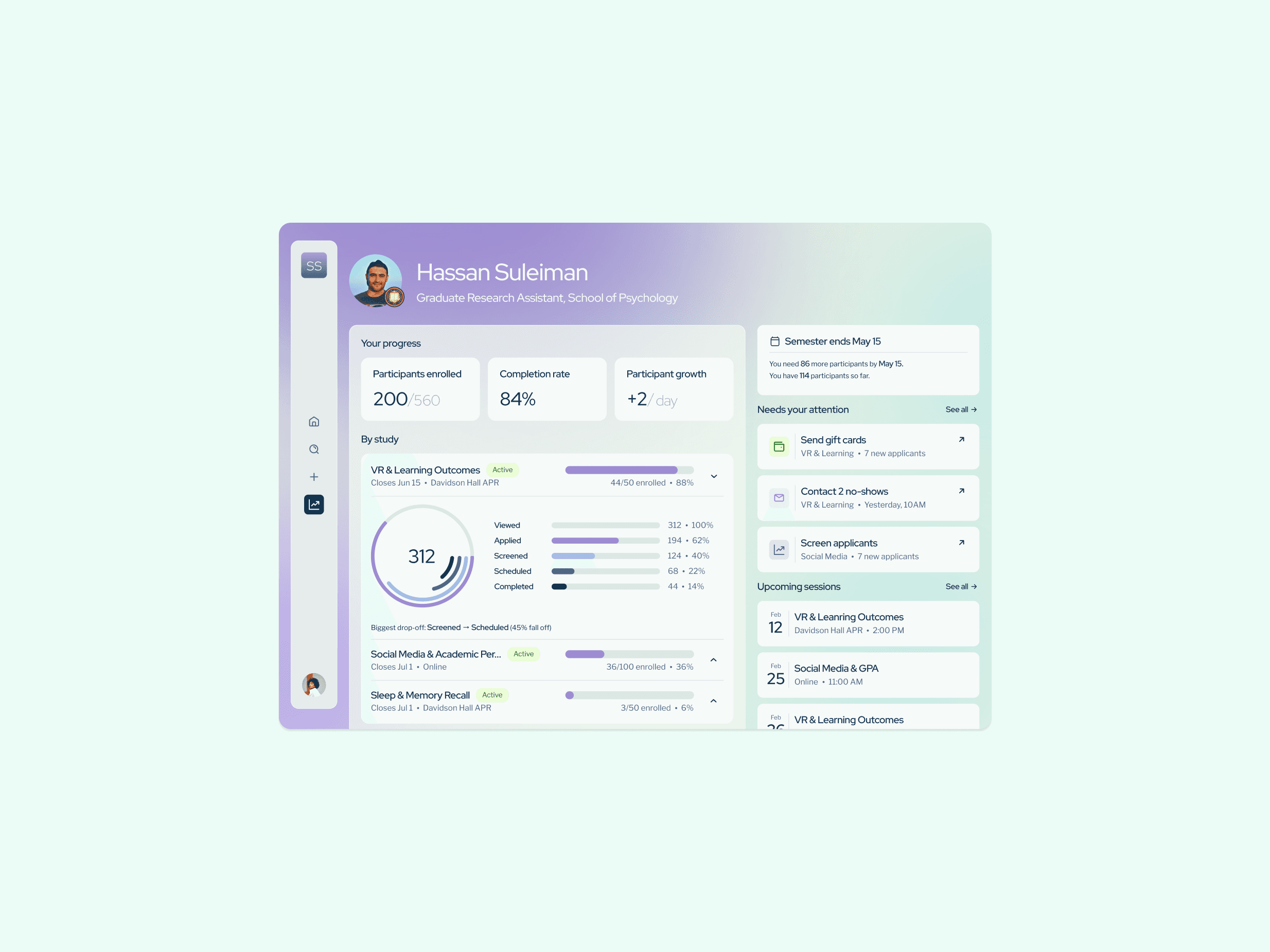
The researcher dashboard gives student researchers a real-time view of recruitment momentum across all active studies. Key metrics sit at the top, including total participants enrolled, completion rate, and daily participant growth, followed by a per-study breakdown showing enrollment progress, funnel drop-off rates, and upcoming sessions. A right panel surfaces actionable tasks like sending gift cards or screening new applicants, so researchers always know what needs attention and can act on it immediately.
Reflection & Next Steps
One thing I'd do differently: I'd involve researchers earlier in the feature prioritization process. The researcher profile was designed primarily from the participant perspective, and with more researcher input, I suspect the dashboard metrics and filtering tools would look quite different.
WITH MORE TIME:
Scan poster → Post study: Let researchers create a listing by photographing their existing recruitment flyer
Non-academic studies: Expand the platform beyond course-credit studies to paid and community research
Study credit completion plan: Help participants plan their credit schedule across the semester
Connect students with research opportunities: Allow undergraduates to express interest in working on faculty-led research projects


